

Interview: Dan Freed
On ADHD and Non-Traditional Founder Paths

Hi all! Interviews are officially back!
A couple of things before we begin:
It was great to meet many of you in New York in June. It’s really rewarding to meet readers IRL and hear how the newsletter has impacted you. It keeps me inspired to keep writing.
I still have a couple of open spots left in my coaching practice. Know a founder who you think I should support? Maybe it’s you? Reply to this email and let me know.
Enjoy my conversation with Dan below. He’s raised over 13M, built two companies that have served hundreds of thousands of people, and his origin story is incredible. We talk mostly about mental health, ADHD, and non-traditional founder paths.
H
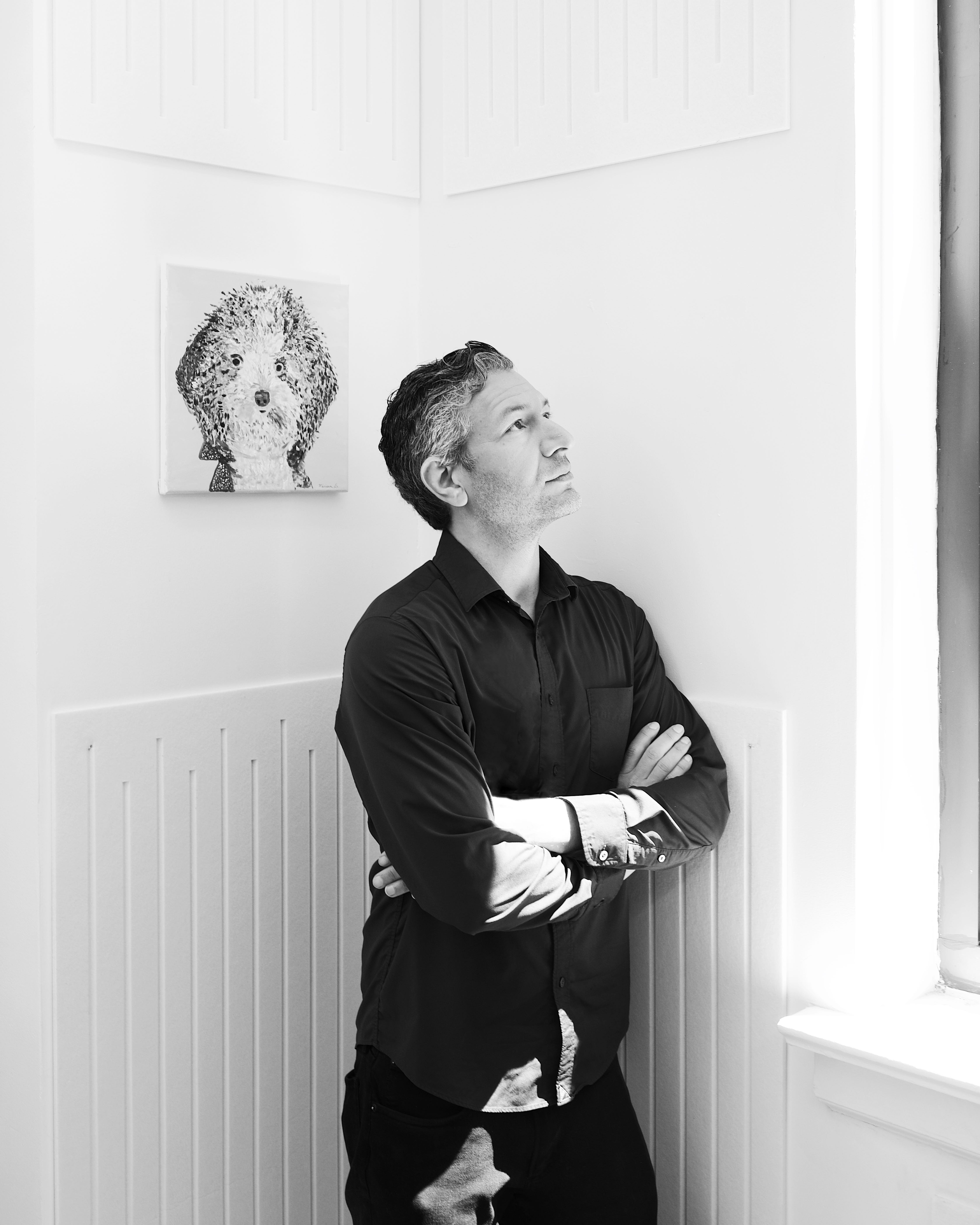
Dan Freed is the founder and CEO of Thesis, the personalized nootropics company widely credited with defining the category. Since launching in 2017, Thesis has served hundreds of thousands of customers, making it the dominant brand in cognitive performance supplements.
Dan grew up in a middle class home in Los Angeles. At six years old, Dan was diagnosed with ADHD and struggled severely in school and social environments. After dropping out of high school at sixteen, and living in and out of homelessness, he found his first passion and career in food. Beginning as a sandwich artist at Subway, he spent his early twenties working his way through restaurant kitchens, including three-Michelin-starred Georges Blanc, eventually working his way to an executive sous chef role.
After a decade in hospitality, he decided to pursue an MBA—a decision that required him to first complete prerequisite coursework at Harvard Extension School, since he had never attended college. He went on to earn his MBA at INSEAD and, eventually, a Master of Advanced Management from Yale School of Management.
It was while studying for the GMAT that Dan first encountered nootropics as an antidote to his ADHD symptoms, and his subsequent decade of self-experimentation became the technical foundation for what would become Thesis. The company launched in 2017.
The company bootstrapped to over a million dollars in monthly revenue before taking outside capital, and has since raised a total of $13.5 million from investors including Unilever Ventures, REDO Ventures, MBX Capital, Trust Ventures, Alive VC, Break Trail Ventures, NBA All-Star Kevin Love, and supermodel Kate Bock. Thesis’s board includes Michael Lynton, the former CEO of Sony Entertainment and chairman of Snap Inc. The company is now profitable, and used by over 100,000 people per day.
Thesis is advised by a scientific board that includes neuroscientists and doctors from Yale, Penn, and Stanford, alongside, triple board certified ADHD psychiatrist and author Dr. Perry Mandanis. The company has partnered with some of the most influential voices in health and wellness, including Stanford neuroscientist and podcaster Dr. Andrew Huberman and ultra-endurance athlete and author Rich Roll.
In 2022, Dan launched Stasis, a companion company designed for the millions of people taking prescription stimulants like Adderall and Vyvanse. Stasis formulations are intended to mitigate the downstream costs of long-term stimulant use, such as sleep disruption, mood volatility, and the depletion of nutrients the medications draw down. It is the first product line of its kind on the market.
Beyond Thesis and Stasis, Dan is an active investor and advisor to early-stage founders, particularly those building from non-traditional backgrounds.
Let’s talk about your early years and how you grew up.
I grew up in Los Angeles. One of the things—and this is actually something I didn’t realize how common it is for people with ADHD—is that I have very few memories of my childhood.
I know I was expelled from preschool at four. I have zero memory of that. I was formally diagnosed with ADHD at six. My first memory is that I got in a fight with another student over Play-Doh. I got hit in the head with a meat tenderizer—one of those wooden ones with the spikes on it that they gave kids to play with Play-Doh. It was my turn, he wouldn’t let me play, so he hit me in the head when we got into a fight, and I ended up having to get stitches across my forehead. I must have been around five years old.
I wouldn’t say my childhood was horrible, but I have a lot of really bad memories of going to the principal’s office, being in trouble, struggling in school. It was always, always difficult for me.
You know I’m ADHD as well, and just yesterday I was talking to my mom about when I got my first emergency parent-teacher conference—in kindergarten. I was refusing to count to 100 because I’d done it before and it didn’t make sense to me to repeat something I’d already done successfully, so I just refused. So I was also considered “problematic.”
I’m wondering about those early conversations and how they impacted how you felt about yourself. I, for example, can look back and be like, “Yeah, that’s me—I don’t want to do something I’ve already done,” and see how it’s defined my path. What are the things you can look back on and think, “That was hard to experience, but some of these things were really core to who I am?”
So I think ADHD comes with oppositional defiant disorder for many people—I definitely have that. I was always talking back to people in authority. And rejection sensitive dysphoria, where I was very sensitive to certain things that others may not be. I was constantly thinking things weren’t fair, and that’s something that’s common among people with ADHD.
One thing I’ll say: because I have very few memories, when my father passed away a couple of years ago, I found a big pile of VHS tapes sitting in the closet. I took all of them and sent them in to get digitized. I thought, “I don’t have that many memories, let me go back and watch.”
I started watching, and there was this one clip—most of our vacations were national parks, staying in a Motel 6. I have a brother and sister, so it’s really hard and expensive to travel with three kids. We were at some national park and my brother and sister were there and I was off-camera, and all I could hear was, “Dan, shut up. Shut up. Why can’t you stay still? What’s wrong with you?” It brought back memories.
And I don’t blame my parents—I think I was exhibiting really negative, antisocial behavior from a young age and they just didn’t know what it was. But I can imagine that after years of that, you internalize it.
Yeah, absolutely.
I never watched the rest of them. After that, I shut it off and thought, okay, now I understand.
I had a very similar experience getting into my family’s VHS tapes. I remember getting through one of them and thinking, “This is probably why I don’t remember my childhood, and I think I’d rather not know what’s on the rest of these.”
Yeah.
It’s interesting how so many of us are cut from the same cloth in so many ways, including core childhood experiences like this.
Yeah. And now I’m starting to get ready to have kids of my own. I always wanted to have kids, but one of my biggest hesitations was that my childhood was so painful. Even now, even working in the ADHD space with a lot more empathy and understanding from a scientific point of view, it’s hard for me not to internalize that there was something wrong with me—that it was kind of my fault—and that bringing a child into the world with severe ADHD like I had just sets them up for a lot of pain. It is a genetic disorder. I talk to friends who have kids exactly like me and it’s hard seeing them navigate it—seeing them navigate a medication journey, psychiatrists. Some of them have their kids on multiple medications: not just ADHD meds, but antidepressants, antipsychotics.
I think I’m equipped to handle it, but that was my biggest hesitation: what do I do if they’re like me?
Yeah, that makes sense. But also—what a gift that you would be their dad.
That’s a good way to look at it.
When I was diagnosed in the late ‘80s, it was highly stigmatized. I think the structured environment of the American educational system wasn’t well equipped to deal with it.
Things are significantly different now. I also know—it’s heartbreaking when I have these conversations with parents. They love their children. I think my parents tried their best with me; they definitely cared about me. But it was still incredibly painful.
Yeah.
I have a theory—that a lot of people who came to Silicon Valley are cut from the same cloth, and a lot of it might be this exact dynamic: we left our hometowns for a reason. We came to Silicon Valley, a lot of us with the same wounds but also the same gifts.
We’re able to build extraordinary things in part because of the gifts we have—the inherent behaviors that come from things like ADHD—and it got us to a certain point, but it will also limit us at some point, and then eventually we have to confront all of it if we want to level up as leaders.
Yeah.
Oppositional defiant disorder is an asset to founders because it’s like, “Oh yeah, you don’t believe in me? Watch me.”
One of the really interesting things I’m looking at is the relationship between ADHD and AI. We have a very talented AI engineer who also has ADHD. We were talking about adoption—how can we get more people in our company to adopt it? It was a very interesting conversation, because to me, AI just comes so naturally. It’s this huge unlock. I’m building things I couldn’t have built before because there were so many roadblocks to getting started. And I don’t understand when I sit down to try to train somebody and I think, “This is so easy. Why can’t you just do it? Watch—it’s not perfect the first time, but this is how you do it.” But it comes naturally to me because of my ADHD.
And then I look back at when I was in school: everybody would say, “Dan, all you have to do is study. All you have to do is your homework. Why can’t you just do it?” And no matter how hard I tried, I just couldn’t, because my brain worked differently.
So when I look at some of these people—highly successful in school, went to the best colleges, have this very successful career—they did it on a very linear path. And now AI comes along and that’s not how you learn a skill anymore. The skillset that got them there doesn’t work now. It gave me a lot of empathy. I don’t know what the solution is, but it’s probably not their fault that it’s a lot harder for them than it is for me.
It’s the same wiring that allowed us to build unconventional companies. Building something from nothing with no structure or roadmap that is completely unique. Not everyone can do this.
I’m curious about the first career path you had—going from making sandwiches at Subway to working up to a really respectable chef role. I also worked in restaurants and bars, and that was the first time I felt like I was good at something. Did you feel that when you got into that field?
Yeah. I started businesses when I was young—delivering flyers, doing things to make money. When I was 14, I got my first actual job with a paycheck and I moved out of my house, which was a huge deal. To me, money was independence. It allowed me to chart my own destiny.
Sorry to interrupt—where did you go when you left your house?
I went with a friend for a while, then with another friend. I was on the streets briefly. As a teenager, I spent time on and off homeless and was in a homeless shelter for a little bit—one actually in New York that we collaborate with and raise money for now. But I always had a job from early on.
Work wasn’t something I felt good at until I found cooking. I was probably around 19, 20, waiting tables in restaurants. There was this regular customer who would come in during the slow time in the afternoon, between lunch and dinner. One day he came in with a chef coat. I told him I’d love to be a chef—I kind of liked cooking—and he told me to go to the hotel across the street and apply.
I walked in, and the woman in HR said, “You have no experience as a chef, you’ve never gone to school, we can’t hire you.” I said, “Listen, this guy told me to come in.” She called him, he walked in, and they hired me on the spot—no experience, no nothing.
My first day, they said, “Show up and bring your knife kit.” I didn’t have a knife kit. I’d never gone to culinary school. So I asked a friend if I could borrow his kitchen knives, put them in socks so they wouldn’t cut up my bag, and put it all in a paper bag. I show up and everyone is taking out thousand-dollar knife kits, and I have old kitchen knives. But I loved cooking, and that was the first time—instead of feeling like it was harder for me, or I wasn’t good at it—I just thought, I get this, I can do it.
I started reading cookbooks. I started getting promoted. In my 20s, the two things I was really passionate about were cooking and travel, and I spent a decade doing both as much as I wanted. That made a huge, huge difference. I do think ADHD was an advantage in that environment.
It sounds like you were first in a traditional environment that just felt fundamentally misaligned, and then you found a world that fit perfectly.
Yeah. This is the thing with ADHD: it has nothing to do with intelligence, nothing to do with willpower or how hard you work. It’s the environment. The one I was in made it almost impossible for me to be successful without some type of help—whether that was medication or nootropics. The kitchen was total chaos. It worked for me.
And the other piece was passion: it wasn’t hard for me to learn because I liked what I was doing. I would just get into flow state. I’ve talked to so many people with ADHD, and sometimes it’s a startup, but having that flip—going from being the worst at everything to everything being easy—was a huge unlock. It gave me so much confidence.
I’m assuming you’ve researched this at this point. Are there general environments that are better for an ADHD type, or is it person to person?
There are environments that are better. The environment of the American educational system didn’t exist a hundred years ago. My grandparents weren’t sitting in a classroom. They were working. For some people it’s easy to adapt or conform to the current system. For me, it’s almost impossible.
I think the other thing is passion. When I have kids, the number one thing I’m going to do is, anytime they’re passionate about something, really nurture that—because I think that’s what builds confidence. When I was a kid, the hard thing was that I wasn’t good at all the stuff I had to do, and I didn’t have sufficient nurturing of the things I wanted to do. That gets to this point where you just kind of give up and think something is wrong with you.
I’m curious about this rejection-of-authority element of ADHD, because so much of my own career has been inspired by wanting to mess with the system. Seeing industries that are antiquated and going in with my own approach. Is leaning into that an automatic advantage to an ADHD type? If you’re going to build a startup, does leaning into that inclination to reject authority add a bit of rocket power?
It does.
So there’s ADHD, oppositional defiant disorder, and rejection sensitive dysphoria. Rejection sensitive dysphoria doesn’t mean I don’t get rejected—it means my response is, “Fuck you. You think this isn’t good? I’m going to show you.”
When I went out to raise money, I just kept hearing no, no, no. And then I would be like, “Okay, watch me.” When I wanted to get an MBA, it was no, no, no. When I wanted to work in a Michelin three-star, I got rejected, I got laughed at—and it hurt, probably more than it would for most people. But my response wasn’t “okay, I give up.” It was “watch me, I’m going to try harder.” It became motivating.
And the oppositional defiant disorder is like: what you’re doing is wrong. I don’t care if you have authority—there’s a better way. Being willing to go up against authority and not just accept it is kind of what startups are. You’re fundamentally saying there’s a better way, something new. And most people just can’t do that.
I mean, I certainly have all of those traits. To me, those traits feel required, even just to fundraise.
I see founders who don’t have ADHD, who have that very linear path of consulting or investment banking, and they still start companies—usually differently. They raise money a lot earlier, have more resources, do things differently.
I also think my background gave me a huge pain tolerance and made me care less about what other people think, and all of those things became huge advantages.
Yeah, that makes sense.
I’ve been thinking a lot about the different archetypes of founder—the one we’re talking about, who has to push against rejection and built outside of a system—and then a kind of founder who came from maybe a more conventional background, has family connections, maybe gets into business by buying businesses instead of building original ones. Do you see that aligning with a neurological difference?
I think there’s a huge difference in the personalities of people who come from non-traditional backgrounds versus people who come from a traditional school-to-job background. One is risk tolerance, which is incredibly important. I have a very, very high risk tolerance—I’ve lost everything before. A lot of people who come from a linear path aren’t as familiar with failure, so they’re less likely to take the types of risks I do. The perspective is different, the management style is very different.
I heard this Korean proverb about climbing a mountain: one person takes the trolley to the top, the other takes the long hike and gets lost and has all these different experiences. The view from the top is the same, but one person has the perspective of that long, winding climb. I do think there are different perspectives, different management styles, different decision-making styles—and people can be very successful either way. They’re just different.
You have such an interesting vantage point on all this, because you did this unconventional, outsider route—and then you got into Yale. I’m very curious what it was like going from that into an environment that’s considered more conventional, where you’re meeting a lot of people on a more traditional path.
I think it was a very interesting experience. I’m so happy I had it. There are a lot of really smart, really driven people. I can’t imagine what it would be like to go to Yale at 18. It blew my mind—the resources, the environment.
Before I went to INSEAD, I went to Boston and took a couple of classes at Harvard Extension School, because given my profile, I wanted to show I could pass a calculus class and a statistics class as part of my application. That’s when I really started working with tech startups. I met a bunch of people at HBS, and one day I was talking with one of my friends and he was complaining about HBS. I got really mad—I was a bit of an asshole—and said, “Do you know how fucking lucky you are that you have this seat? I’m trying everything in my life to get there and you’re going to complain about these stupid little things?”
I think people are calibrated differently. Given my breadth of experience—some incredible highs, some incredible lows—I have a broader perspective and more gratitude in some cases. It’s not that everyone doesn’t have the right to be mad and complain and have bad days. My perspective is just a little wider.
One of the things that actually shocked me was that a lot of people at Yale are very smart and very hardworking, but not all of them. I had this image in my mind: if you go to a school like this, you’re just brilliant. And some of the people I was around—I was just so shocked. I would say the vast majority of people are very smart and hardworking, but that gap was shocking to me.
And that’s actually one of the biggest biases I still have now, even with my background: I’ll see somebody with a great resume, who’s worked at great companies, went to an Ivy League school, and I over-index on that even when their actual abilities might not be that great. It’s something I continuously need to recalibrate.
Yeah, that makes sense.
I feel like my audience has always skewed toward unconventional founders, or people from unconventional backgrounds—it’s the audience I’ve made things for for the last 15 years. I think this interview feels really important because there are these threads that connect across the conversation: founders from unconventional backgrounds often share childhood experiences, and often generally feel like an outsider. They don’t have parents who grew up in the Ivy Leagues or in that world. I know I have a lot of readers who are either founders who don’t feel like they belong, or founder-curious people who just don’t feel like the path is possible. A lot of people assume I’m an insider—and a lot of people probably assume the same about you. I’m really curious about the ways we can help rewire people earlier in the process to make them understand that it’s not only possible to succeed as a founder, but there are even advantages.
One of our early employees—he’s a founder now—he didn’t come from that traditional path either. The people who are very smart, who usually come from wealthy families and are top of their class, go to competitive schools and companies and stay at the top. When they become founders, it’s easier to raise money because you have this track record of success. I knew that wasn’t me. So how do you catch up?
In my view, you have to take more risks. Knowing I’m not in that position, knowing some things are going to be harder and some slightly easier—the only way to get to the same place is to do something different. For me, that’s a lot of risk, a lot of failure, a lot of grit, and then pushing through things that are just absurdly hard. My background and my ADHD set me up perfectly for exactly that.
I think about my own fundraising journey—I raised 17m, but I never had a lead. I had to raise it all on rolling notes, and do 10 times as much fundraising to get all those small checks to add up. But the advantage of that is real: if I had been a conventional founder who could raise very quickly, I wouldn’t really know how to fundraise well. Instead, I got a masterclass through practice.
Yep. I was horrible at raising money. Now I’m very, very good, and it was just because I had to. Because we didn’t have money, I maxed out all of our credit cards, which taught me a financial discipline that you never really learn if you raise money easily. There are so many startups running unprofitably. Because it was my money, my personal credit cards, I just behaved differently.
In one way it became a liability: when we raised our Series A, we had a couple million in EBITDA and a huge tax bill, and some of the investors told me, “What’s wrong with you? You had the opportunity to deploy more capital, to grow faster—it would’ve been better for the business.” I was so afraid because of my relationship with money that I had to recalibrate. So it can be an advantage and a disadvantage, but it’s very, very different.
What other parts of this journey felt like they came really naturally to you, and what came with a steep learning curve?
I think raising money was one of the hardest things I had to do. I also don’t do well when I don’t have power—I’m not sure that’s the best way to put it, but I have autonomy as a founder: I can make changes to the business, changes to personnel, I generally have a lot of control over my day to day. But a lawsuit, for example—I have to deal with lawyers, and I just have to deal with whatever happens. I can’t just control it and solve it. Anytime those situations arise, it impacts me emotionally.
Going from founder to CEO—which is kind of what I’m doing now—is very, very difficult for me. We’re about 40 employees now, and in the early days when we were maybe 15, I could be in founder mode for everything, making all the decisions, knowing everybody on the team really well. Now you just can’t do that. A lot of times I’ll still try to fix things directly, but now it’s more about setting up systems and organization. I’ve done well at hiring people I can trust to put in the structure you need to scale. For me, being a founder comes naturally; being a CEO does not. It’s taken me longer to learn that skillset.
Looking back, what are the roles you hired for that felt even necessary and complementary to your skillset and wiring—and what do you wish you’d hired for earlier?
My co-founder, Adam—thank God he joined. He was at a competitor and cold-emailed me, and it wasn’t a skillset I understood I needed until he was there. He’s one of the most positive people I’ve ever met. I can get very stressed, and I’m somewhat of a pessimist sometimes. He just always had such a positive attitude. People loved being around him. I’m the last person who’s going to talk about vibes, but he just had such positive vibes, and when you’re in a volatile startup, that’s so incredibly important. He brought in some of our best partnerships, investors, and board members, just because he’s very outgoing and very social.
We used to say he was the heart of the company. He left after our Series A, and I’ve been very careful ever since to make sure there’s always someone I think of as a vibes person. I underappreciated it until I didn’t have it.
Organization is another one. I hate organization. Now I have a chief of staff. I always have someone who can keep track of things and make sure I don’t forget things—almost like a boss for me. One of the most maddening things about ADHD is that I won’t text people back when it would take five minutes, or a really important email will just sit in drafts for a week or two. Having someone who can make sure that doesn’t happen, and who I can trust enough to handle some of it themselves, has been huge.
HR is another one. I don’t like politics, and I think we do a great job of keeping our culture low-politics and low-ego. But there’s always some kind of HR thing that will pop up, and that was one of the worst parts of my job. Now we have an incredible VP of HR and most of it never even gets to me. Conflicts, interpersonal issues—it’s the last thing I want to deal with, and it’s also something I will expend enormous emotional energy on. He just takes all of it. That’s made my life so, so much easier.
I have so many ADHD clients, and the biggest thing I see them dealing with is decision paralysis. How much has that been a part of your life, and how have you managed it?
There are some decisions where, when I’m less confident, I take too long to make them. But I have a good system of people around me who don’t let that go on for too long. I also think about the Type 1 and Type 2 decision framework: very few decisions are truly irreversible. I’m okay with failing. I have a risk tolerance where I think, “Any decision is better than no decision here. We’ve got to make something and move forward.” So I’ve created systems to mitigate it.
I want to ask about what you know about ADHD and trauma. I know the research shows significant symptom overlap. For example, I have a PTSD diagnosis, I also have an ADHD diagnosis. The research indicates that these are often related, and often very chicken-and-egg. I’m curious what you know about symptom overlap.
Yeah. There’s no clear answer, but attempting to understand your mental health is important.
I have a history of depression—it runs very, very deeply in my family—and I would go through major depressions where it’d be really, really tough.
I look at my personal growth and mental health as one of the constraints on the business growing. As a founder-CEO, I’m not qualified for my role in the conventional sense—if you were hiring for it, you probably wouldn’t hire me. So understanding that and really investing in personal and professional growth, and also pharmacology.
For example, Ketamine helped me for a long, long time with depression. I’ve also done TMS, a stellate ganglion block. I’m constantly investing in ways to grow, from the Hoffman Institute to various immersive programs. It’s all kind of asking: how do I invest in growing as a human so that I can be better and happier?
Did you always know that mental health should be a priority, or was there a moment when you realized it was important—an actual business constraint? I remember when that moment happened for me, and that’s when I finally became open to therapy in my 20s and eventually ended up on my path toward psychology. When was that moment for you?
It’s hard. Having depression, I understand that if I don’t take care of myself, everything in my life will just go to shit. The pain becomes so much that it forces me to find a way out. I think with the business, it’s a very unique role—high stress, and I care so much about my company. At this point it’s like 10 years of my life, all of my net worth, my identity—everything’s wrapped up in it. In some ways you have to get a detachment from it, but you can never really do that, and this creates insane amounts of stress.
We’ve had times where we’ve had to do layoffs, or growth was going down, and it just felt like I was under attack. That pain becomes a forcing factor. I throw everything at it—I do a lot of psychedelics, everything from iboga to ayahuasca to ketamine. I do different types of therapy.
It’s almost like the pain comes first and then I throw anything I can at it to get through it. The interesting flip side is that no other job positions me for this much growth.
I’m in this field not only because I used to do it, but because I came away from it thinking nothing will force you to grow more, other than parenthood, than building a company. You will be forced to confront your deepest, darkest stuff. It’s a massive risk, and so difficult, and it will transform you.
Yeah. And there are other rewards, like access. One of our board members is the chairman of three public companies. He was CEO of an organization with 50,000 people. To have somebody like that as almost a mentor to me—no other place would give me access to people like this. There are many people invested in the success of the company who spend time teaching me how to be a better CEO. I would never have had access to people like this if it weren’t for my current role.
It’s a real gift. What do you feel like, on a collective founder level, more people should understand about this work—working on the mind, on the self, on mental health? What do you wish more founders knew was available to them?
I have a coach, and I think a lot of founders take too long to get one. Understanding where you are in a transition matters too—right now I’m changing from founder to CEO. What does that mean? Who do I need to hire? How do I have to structure things?
Most of the big realizations for me came when it was too late. I don’t know if it’s me or if it’s common, but a lot of times the pain will be so great that it forces me to grow or have a realization, and then I don’t make that mistake again—I make something else. If there was a way to short circuit the pain, I wish I could learn it. But I haven’t been able to yet.
Yeah. In grad school, I studied a lot of spiritual and religious modalities and their impact on human behavior and how the world runs. One concept I encountered was this idea that all of us on this path, whether we like it or not, are forced to learn blind—and very often we will find the exact material we would have really liked to encounter only after the fact. Not as a cruel cosmic joke, but as if to validate what we went through and give context: “Oh yeah, here’s what you just did, and congratulations. Sorry we couldn’t give it to you ahead of time. You had to figure it out yourself.”
Yeah, I’ve had that experience too.
What has building your company, and your products specifically, taught you about people’s resistance to getting help with their mental health, either through medication or other means?
The product is something I wish had existed for me when I was a child, going through all of those different things. Certain environments aren’t meant for somebody with my type of brain—that was a huge unlock for me to be able to understand. It’s a struggle even in this startup. One of the things I do is balance myself out by hiring people who complement me and can do some of the things I’m really not good at.
I also wouldn’t be able to have this job if it weren’t for nootropics and, in some cases, medication.I stopped taking medication when I was a teenager and didn’t restart medication until a couple of years ago when we launched Stasis. Now sometimes I’ll take stimulants, sometimes I’ll take nootropics, but I’m able to take stimulants without having side effects, which is huge. That’s been a massive unlock.
Can I ask—when do you personally know it’s time for stimulants versus something else to help with ADHD? I want readers to have an idea of like, “Oh, I should be considering this if I’m dealing with X, Y, Z.”
I have insomnia, and sometimes it’s really bad, sometimes not that bad. When I’m dealing with insomnia and sleep deprivation, stimulants are a temporary bandaid—not ideal, but that’s one of the big use cases I use them for.
Other times, there’s always more on my plate than I can do, and every once in a while I look around and think, “I need to get through a lot of stuff.” And then there are certain things I have to do that are harder for me—reading legal documents for due diligence, for example. That’s very high-stakes and requires focus I can only sustain with a stimulant. There are certain types of deep work where I just know I’m better off with one. But still, the majority of the time I don’t take stimulants.
I think it’s important we’re having this conversation, because there’s a misconception that if you choose to get on the path of a stimulant—if you get diagnosed with ADHD and you’re on Vyvanse, for example—then you’ve got to be on Vyvanse forever. I haven’t encountered many conversations about, “No, it’s okay to be on these meds for little chunks of time, or for these specific scenarios.” I never encountered those conversations with a psychiatrist or a pharmacist.
I don’t think I’ve ever had a great ADHD psychiatrist, and I don’t think it’s entirely their fault. It’s usually, “Here’s a script”—they don’t really guide you through it. A lot of people just figure it out, because stimulants are one of the few medications where prescribers will say, “Take a Vyvanse in the morning, then in the afternoon maybe take an Adderall instant release—maybe 5 milligrams, maybe 20—feel it out, go figure it out.” So you kind of experiment, and unlike an antidepressant, you don’t have to take it consistently. That gave me the ability to try a lot of different things and figure out what works.
What happened for me is I went more than 10 years without taking stimulants because I got really bad side effects—it would impact my personality, I’d get angry and irritable, and I didn’t want to become that person. I didn’t start taking them again until I was formulating for the Stasis product line. When I was studying for the GMAT and doing all of that, stimulants probably would have been incredibly helpful, but I was scared. Thank God I found nootropics that worked.
Yeah. I dealt with the same thing—I was on Vyvanse and it made me aggressive. Your product helped me a lot, and then I was able to get off it, which was kind of cool to discover.
Going back to the beginning—I’m curious about your relationship to all of the initial things you were told about yourself—all that early messaging about how much of a problem you were. Does it haunt you, or have you been able to cognitively work through it?
So… I know that I’m intelligent. For a very long period of time, I questioned that, but going to Yale, getting honors in some classes with a lot of smart people competing for those honors—that alone gave me a lot of confidence. Having my GMAT score—all of that. I knew I had some form of intelligence. I didn’t think I was stupid before, but I thought my raw horsepower was limited. If you had asked me as a teenager, I would have answered very, very differently.
I also think there are a lot of different types of intelligence, and academic intelligence is not the only kind.
I still have something there, though—and this connects to the conversation about having kids. No matter how much I understand intellectually that I was a child and there was nothing wrong with me, there’s still something where I think, “Why am I different in this way? What’s wrong with me? Why can’t I be like someone else?” On an emotional level, that’s still with me a little bit.
A lot of the things I’ve learned to appreciate over time—knowing I’m different in some ways, but not being envious of people who aren’t like that. My sister is the exact opposite of me. Growing up with her, I could see her behavior was different; things looked easier for her. It took me a long time to get there.
The core thing with fairness is probably what I struggle with most. Every founder I know has some type of legal issue and horror story. For me, it’s harder to manage my emotions around that. I understand it on an intellectual level, but on an emotional level it’s still very, very hard.
Yeah. I can relate to having trouble with unfairness. A big part of what sent me back to school was what I witnessed related to what people will do for power and money when I was building Haus—the lows of human behavior that show up in this space, especially when you start dealing with millions of dollars and people with a lot of money. It’s a lot. I wanted to make sense of it.
I think that’s one of the things—without giving any examples—you see a lot of disturbing things when you’re a CEO. A lot of it really comes down to greed. The vast majority of people are good, but money does a lot of weird things to people. I’ve been shocked at how egregious some behavior can be. You don’t really see that unless you’re in the CEO’s seat or at a very, very high level. When you are, you’ll see it pretty often.
Was there any part of you—when you were first exposed to seeing some of these things—where you took it personally or blamed yourself? I was wired to believe, when I saw egregious behavior, that it was somehow my fault.
I wouldn’t say I thought it was my fault. More like, “I should have seen this coming. I should have prevented it.” And a lot of this stuff is just: no, you can’t see things like this coming.
Getting to the fairness thing: it’s not my job to make life fair. There are people with a lot of money and a lot of bad behavior who are just going to keep being themselves, and maybe they face consequences, maybe they don’t. I can understand that on an intellectual level. But on an emotional level, it still really gets to me when I see things that are just wrong and there are no consequences.
To be fair, though—who knows what people say about me? You never know what the other person’s perspective is. I hold myself to a very high ethical bar, but that’s from my own perspective, and other people might not see it the same way.
Yeah. Well, a thief thinks everyone else is a thief too.
Yeah.
That’s generally how it goes. I was just at a brunch this morning with a group of founders and there’s a real heaviness in the air right now—this disenchantment, this feeling being surrounded by corruption and immorality. It’s happening everywhere, but a certain generation of founders is reaching this state of disillusionment. They’re finally seeing enough to be like, “This is kind of a nasty, gnarly world we’re playing in.”
Something I brought up in response—because I went through that disillusionment too—was one of the first classes I took in my master’s program. It was a required course on the history of institutions of knowledge going back thousands of years. When I went into the program, I was still in a really strong state of disillusionment: fuck Silicon Valley, fuck the world I was in, it was so corrupt, I need to do something else. But one of the initial moments of revelation for me was this class, making something very clear to me—there’s nowhere to go. It’s been like this forever. For thousands of years, every industry has been rife with unfairness and corruption, and it also has amazing people and great innovation and positive impact simultaneously. There’s good and bad everywhere. I could have left Silicon Valley and fully committed to academia and found corruption there too. It was momentarily disappointing but ultimately a freeing feeling: there is nowhere else to go. I’m not going to find utopia. I just need to decide where I want to sit in the system, and who I want to be.
I agree with that. Things could be a lot worse. I think it’s harder for someone with ADHD like me because I inherently want things to be fair, and it’s also harder because I care so much about what I’ve built. I put so much into it that it’s hard not to take things personally. I don’t have a kid, so I don’t know what it’s like to care that much about something else, but you put so much into your business that it’s hard not to take things personally. Someone coming along trying to take something from it—I know intellectually it’s almost always greed, it’s nothing personal. But for me it feels personal because I built this, and I’m trying to build this to help people and have a change in the world. That makes me mad.
But let’s talk about something else—something happier.
Sure. Over the course of the entrepreneurial journey, what has been the most rewarding? I’m sure to me it sounds like you’re living a life beyond your wildest dreams in terms of what you’ve been able to produce and probably the life you’ve built for yourself. What have been the gifts of this journey?
This is better than anything I could have imagined. It’s easy to forget that sometimes, but if you asked me when I started the company—I never thought it would be this successful.
One of the most rewarding things: when we were this small, scrappy startup and couldn’t afford to pay people very much, about half of those early employees have gone on to become founders. I’ve gone on to invest in some of their companies, to advise. It’s been incredibly rewarding to see that. A lot of people helped me. Even this week I took another founder out to dinner and I’m going to invest in his company—not much, but the fact that I can do that. I remember the first checks that came into my company were from my old boss and somebody I shared an office with. They were helping me, making intros to investors, giving me guidance. I went to them and said, “I want you guys to be advisors—here’s the paperwork.” And they said, “No, we’d rather buy equity,” and they became my first two investors. I’ve done that over and over again, and being able to play that role now for some people is deeply, deeply rewarding.
That’s beautiful. What drives you now? Is it a vision for the future? What’s the main motivator, and has it changed?
It’s that our product impacts people. One of the things about having a physical product is that this morning, somewhere around 100,000 people woke up and took one of our products. That is just so insanely rewarding—that something that came from my head is now out in the world. We get reviews; it doesn’t work for everyone, it’s not transformational for everyone. But for a good chunk of people like me—and even people not like me—it’s incredible, and knowing I can have that type of impact is deeply rewarding.
Seeing the team grow and change—one of the things I measure myself on is: when somebody leaves, are they better off than when they came in? We’ve created an environment that allows people to have these incredible growth journeys. Being able to watch that, and then staying friends with some of them after they leave and seeing where they land and who they become—that’s incredible.
And same thing with me. I’m still growing, I’m still changing, and I like who I’m growing into.
Well, thank you for this. One last question: how can the community—anyone reading this newsletter—support you?
The biggest thing is hiring. We’re always hiring, so if anyone’s interested in roles, they can reach out to me directly or send referrals. We’re also doing a bigger push into science, research, and marketing through healthcare practitioners, and doing partnerships with other startups in the space—whether that’s neurodivergency, telehealth psychiatry, that kind of thing. Any thoughts or intros along those lines would be great. Those are the main things right now.
Great. And otherwise, I’ll be singing your praises and making sure more people know you exist—because I think a lot of people could benefit from your product and your expertise.
Thanks so much.